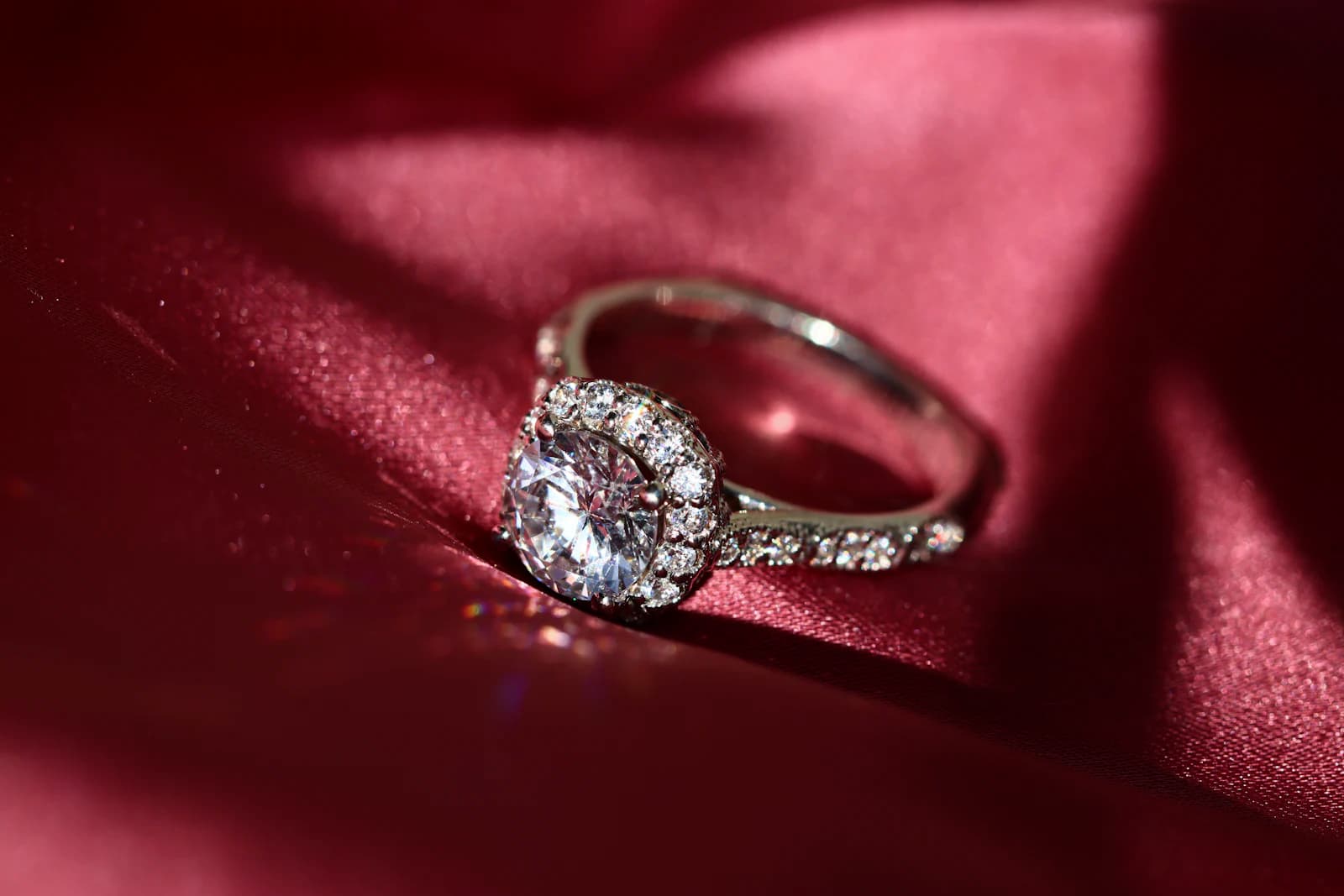
Carat: the heavyweight of the four
Carat is simply weight — one carat is a fifth of a gram — and it's the biggest single driver of a diamond's value. But the price curve isn't a straight line: because demand clusters at milestone sizes, a 1.0-carat stone is worth meaningfully more than two 0.5-carat stones combined, and prices step up sharply at the half- and whole-carat marks.
This is why an honest appraisal starts with an accurate weight, measured on a calibrated scale for loose stones or calculated precisely from measurements for mounted ones. If you know your stone's weight from a receipt or certificate, you're already ahead.
Cut, color, and clarity: the sparkle, the tint, the fingerprints
Cut is how well the stone was shaped to return light — it's why two diamonds of identical weight can look completely different, one lively and one glassy. Grades run from Excellent to Poor, and a well-cut stone earns a genuine premium. Color grades run from D (icy colorless, most valuable) down through the alphabet as faint yellow or brown creeps in; most engagement-ring diamonds live in the D-to-J range. Clarity measures the little internal characteristics — "inclusions" — under 10x magnification, from Flawless down to Included grades you can spot with the naked eye.
Here's the plain-English version: for resale purposes, cut makes it beautiful, color and clarity mostly matter at the extremes, and carat sets the ballpark. A jeweler's loupe and a trained eye can read all four in a few minutes — which is exactly what happens, in front of you, at our counter.
Paper matters: certificates and appraisals
A grading report from a respected lab — GIA is the gold standard — removes the guesswork from a diamond's grades, and buyers pay for that certainty. If your stone came with a certificate, bring it: it can add real money to your offer. An insurance appraisal is useful too, though be aware those are written for replacement cost at retail, which is not the same as market value.
No paperwork? No problem at all — it just means the evaluation happens at the counter instead of on paper. It takes a few extra minutes and costs you nothing.
Why resale is below retail — and what a fair offer looks like
The uncomfortable truth every seller deserves to hear straight: diamonds resell below their retail price, often well below. Retail includes the store's overhead, marketing, and margin — none of which transfer when you sell. That gap surprises people, and dishonest buyers exploit the confusion in both directions: some lowball sellers who don't know better, others advertise inflated promises they quietly walk back at the counter.
A fair offer is based on the stone's actual grades and what comparable stones genuinely trade for, explained to you step by step. That's been the Cohen way since 1955: we'll show you what we see in the stone, tell you how we got to the number, and the decision is always yours. Estimates are free, whether you're selling outright or borrowing against it.
Bring it in — estimates are free
Reading gets you close; the scale and the tester get you exact. Free, fast, no obligation — since 1955.